You already know film and coating do different jobs. The booking question is how to put both on one San Diego plan without mixing coverage, prep, or warranties, and Paint Shield SD matches you with a vetted, insured local pro you contract and pay directly.
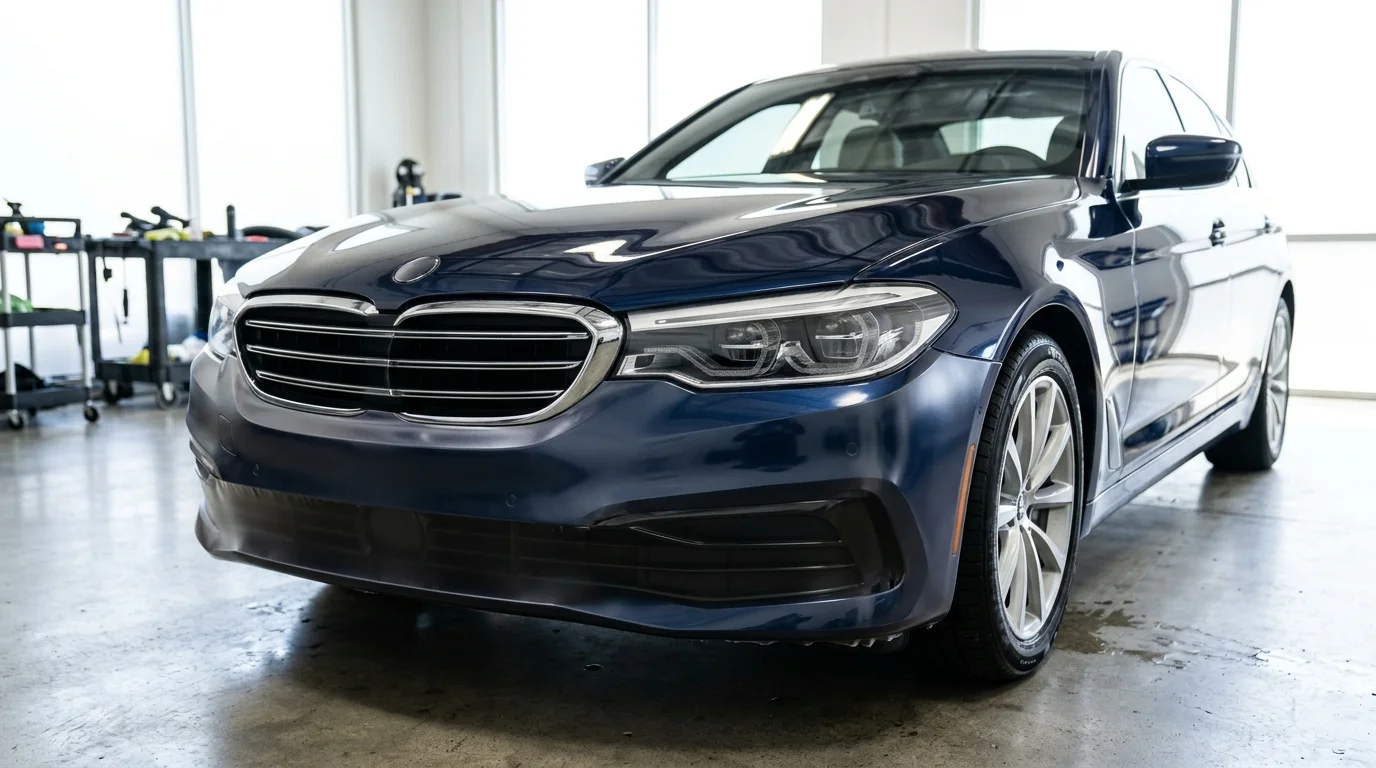
What a combined protection plan is meant to cover
A combined plan isn’t two products stacked for show. It’s a map of which panels take impact, and which surfaces only need a bonded liquid layer.
Paint protection film is a flexible thermoplastic film. It physically shields paint from chips, scratches, and road debris. Some films use urethane with a self-healing top coat for light surface scratches. That coat doesn’t heal punctures, deep damage, or the paint under the film.
Ceramic coating is a liquid polymer that bonds chemically to paint. It creates a hard, hydrophobic surface. It resists water, UV, and light chemical exposure. It doesn’t absorb rock chip impacts.
That split is why people book both. Film belongs on high-strike panels. Coating belongs on paint that still needs easier washing and UV resistance. If you only need one of those jobs, a combo is extra work. Our ceramic coating vs paint protection film guide stays on that product choice. This page is about booking both once you already want both.
A new car protection package is the usual shape for a car that just left the dealer. The installer inspects factory paint first. Professional removal of film on healthy factory paint is the normal case. Failing paint or a previous respray is the risk case. That inspection decides whether film, coating, or paint correction even belongs on the plan.
Coverage isn’t one county-wide stack. A daily driver that lives on I-15 through Mission Valley doesn’t need the same film map as a car that mostly sits in a La Jolla garage and runs the coast. The full car protection package explained post walks through package logic. Your written quote should still name panels, not a nickname.
Wheels, glass, and interior coatings are separate line items when they appear. Headlight film is a different product from paint film. Confirm those extras only if you asked for them. A ceramic coating and ppf package should read like a parts list you can check against the car, not a slogan.
How film and coating are usually sequenced
Sequence is a shop decision, not a slogan. Confirm the exact film, coating, and order with the independent pro before you pay a deposit.
One verified constraint matters at booking. Existing wax or coating on a panel can interfere with film adhesion. The film installer specifies prep. That’s why many shops film first, then coat. It’s also why a coating already on the car can force extra removal work before film can go down.
Don’t treat that pattern as a universal stacking rule. Product chemistry varies. Some coatings are sold for use over film. Some aren’t. We don’t name film or coating brands, and we don’t invent a cure clock. Ask the installer which product sits on paint, which product sits on film, and whether those two products are approved to meet.
Paint correction sits before both when the clear coat needs it. Machine polishing can improve swirl marks, water spots, light scratches, and oxidation in the clear coat. The installer assesses the paint and quotes the safe stage before any coating or film. Clay bar is a decontamination step after a wash and before coating. It isn’t paint correction. Don’t clay a coated car without the installer’s advice.
If you already have film and you’re asking whether coating can go over it, read ceramic coating over paint protection film. Then still have the pro inspect the film edges, yellowing, and adhesion. Coating over lifting film locks in a problem.
Time on the calendar isn’t one number. Ceramic coating is typically 1 to 2 days. Extra days apply when paint correction is included. Full-body PPF is typically 3 to 5 days for a standard vehicle. A combined plan can run longer than either job alone. Those ranges are expectations. They’re not a scheduling promise. Same-week scheduling is available for most services. The installer confirms the actual start date in writing.
Aftercare is part of sequence too. Avoid brush tunnels. Follow the installed product care sheet for soap, chemicals, timing, and whether a touchless wash or pH-neutral hand wash is listed. Use only compatible maintenance toppers. Don’t assume carnauba wax belongs on a coating.
How San Diego driving changes the scope
San Diego County isn’t one paint climate. Coastal north county, inland north county, the central city, East County, and the South Bay beat a car in different ways.
I-15 through Escondido, Mira Mesa, and Mission Valley throws grit and chips at the bumper, hood, and mirrors. I-5 from Oceanside down through University City and National City does the same, with more stop-and-go and more parking-lot dings near the beaches. SR-52 between La Jolla and Santee is a short run with a lot of truck spray and shoulder gravel. Film on those leading edges is the chip answer. Coating on those same panels doesn’t replace film.
Coastal parking changes the other half of the plan. A car that sits in Pacific Beach, Mission Beach, Ocean Beach, or Coronado picks up salt, fog drip, and mineral spots. Encinitas morning marine layer is wet and cool. El Cajon afternoons are hotter and drier, with more dust and less salt. Chula Vista and San Ysidro add border-corridor debris on top of South Bay sun. A coastal car often needs more attention to wash method and to coating on exposed paint. An inland commuter in Poway or Rancho Bernardo often needs more film on the front, not more product everywhere.
None of that means every car needs full-body film plus a coating. A garage-kept car in Rancho Santa Fe that rarely sees the freeway may need a smaller film map. A truck that runs Otay Mesa and the 905 may need more front coverage and an honest talk about rocker panels. Ask the pro to walk the car in the light you actually park in.
If you searched ppf and ceramic coating near me because you live in the City of San Diego, start with ceramic coating in San Diego. Getting matched costs you nothing. The in-person vehicle assessment and written quote cost you nothing. You pay the installer you choose for the work.
A federal note belongs here because new-car buyers ask it every week. Under the Magnuson-Moss Warranty Act, enforced by the FTC, a vehicle manufacturer generally cannot void a warranty merely because an aftermarket product was used, unless that product caused the failure. That isn’t a promise that your warranty is protected. Causation is fact-specific. Don’t treat a blog line as advice on a warranty dispute.
What the written quote should separate
A combined quote that only says “PPF and ceramic package” isn’t a quote you can compare. Ask for line items.
Film should list panels, not a nickname. Bumper, hood, fenders, mirrors, headlights, and A-pillars are different jobs. Full-front and full-body are different scopes. In San Diego, paint protection film is typically $800 to $8,000 depending on coverage and vehicle size. Your installer confirms the written price.
Coating should list surfaces. Paint only is one job. Paint plus wheels is another. Interior coating is another. Ceramic coating in this market is typically $500 to $3,000. Your installer confirms the written price.
Paint correction, if needed, should sit on its own line. It typically runs $300 to $1,200 depending on vehicle size and defect severity. Ceramic maintenance visits later typically run $150 to $350 depending on scope. Those visits aren’t the install.
Ask the quote to name which panels get film, and which remaining paint gets coating. Ask whether coating also goes over the film, and with which product. Ask for prep and correction stages in writing. Ask for the film warranty the installer actually issues, and the wash rules for each surface.
Don’t accept a verbal warranty length. Manufacturer marketing numbers aren’t a contract. Your installer confirms the film warranty in writing. Ceramic durability in years isn’t something this site can state.
A ppf and ceramic coating San Diego quote is the sum of those lines, not a mystery bundle. If two quotes are thousands apart, the coverage map is usually the reason. Compare panels and prep, then price. Getting matched costs you nothing. The brand doesn’t set the installer’s price.
Questions to ask before you book both
Bring these to the in-person look. Leave with answers in the quote, not in a hallway chat.
Ask which panels take film for your actual routes. I-15, I-5, and SR-52 aren’t the same as a coastal neighborhood loop. Ask the pro to mark the car, not to sell a package name.
Ask what sits on paint versus what sits on film. Confirm that the coating is approved for that film, or that the film is left uncoated if that’s the product rule. Confirm the sequence and the prep. If wax or a prior coating is on the car, ask what has to come off first.
Ask about paint condition. Swirls, water spots, and oxidation get quoted as correction, or they get left in place under film and coating. You want that choice in writing.
Ask how you’ll wash both surfaces. Brush tunnels are a bad fit. The care sheet controls soap, chemicals, and timing. Mineral-bearing water that air dries can spot a coating. Coastal owners should ask about that specifically.
Ask who you pay, and who stands behind the work. You contract with the installer. Paint Shield SD refers. The matched pros are vetted and insured. There’s no California contractor license for this trade, so don’t ask for a CSLB number. Ask for insurance proof and the written warranty instead.
Ask the calendar in days, not slogans. Same-week scheduling is available for most services. Combined film and coating still follows the 1 to 2 day coating range and the 3 to 5 day full-body film range when that coverage is in the plan, plus extra days if correction is included. The installer confirms the dates.
If the answers are vague, wait. A combined plan is hard to unwind once film is down.
When to call us
Book a professional Ceramic Coating and Paint Protection Film pro when you want film and coating on one written plan, with panels, sequence, and aftercare named before anyone starts. Call us at (760) 400-6557 and we’ll connect you with a vetted, insured local pro.