Two different products, two different jobs
Ceramic coating and paint protection film are both sold as “paint protection,” which creates a lot of confusion. They address different threats at different price points, and some San Diego drivers use one while others combine them on selected panels.
The short version: PPF is the thicker sacrificial layer for physical impacts, while ceramic coating changes the paint surface’s water and contamination behavior. Neither makes the vehicle immune to damage.
What ceramic coating actually does
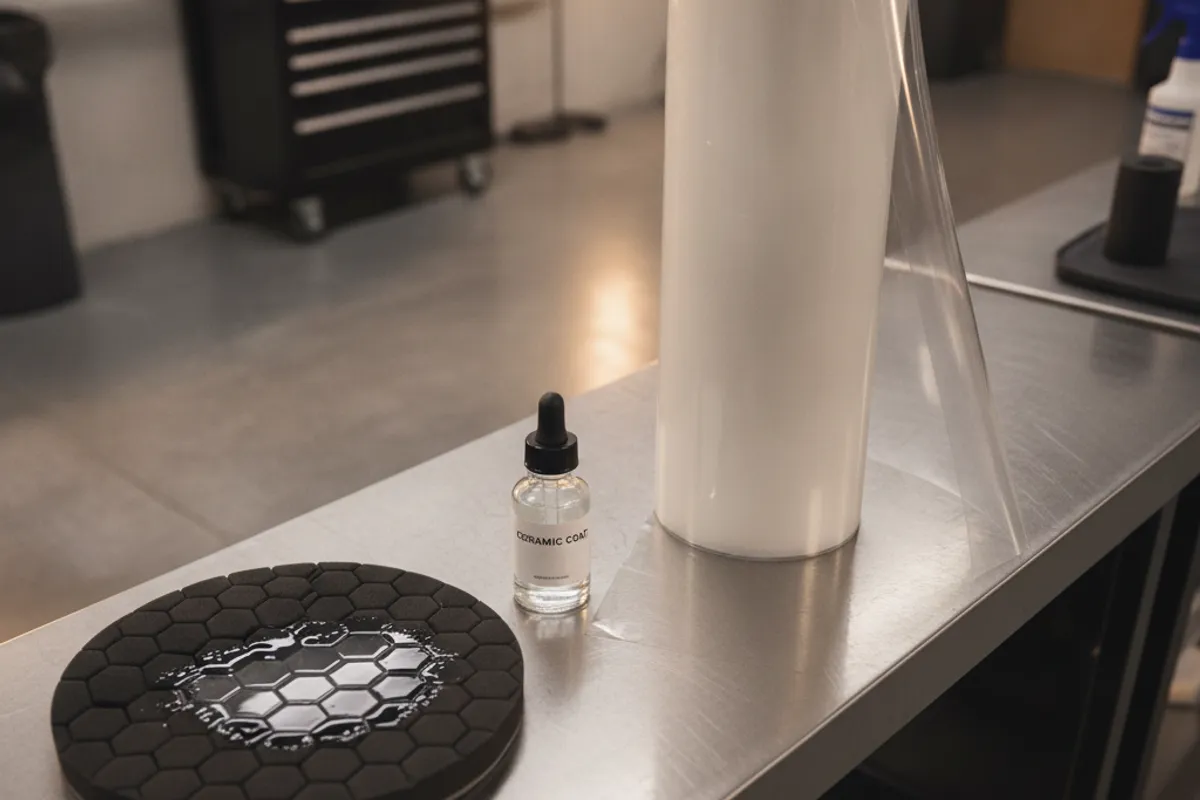
Ceramic coating is a liquid polymer that bonds chemically to the clear coat. Once cured, it creates a harder, more hydrophobic surface layer. Water beads and sheets off rather than sitting in place. Contaminants have a harder time bonding. Washing is faster and causes less swirl damage because grit rinses away instead of dragging across the paint.
What ceramic coating does not do: it does not absorb impacts. A rock at highway speed on the 15 through Miramar will chip through ceramic coating the same as it would through bare clear coat. Ceramic coating is not a physical barrier. It is a chemical barrier.
The same rock that chips a hood often chips the glass, and that is a separate job from anything on this page. Glass damage is resin repair, covered on the windshield chip repair page, not a paint product.
How long a professional coating lasts depends on the product tier, the quality of the paint prep and how the car is washed afterward, so treat any single advertised figure as marketing. It costs $500-$3,000 installed in San Diego depending on the correction required and the coating tier.
What paint protection film actually does
Paint protection film (also called PPF or clear bra) is a clear thermoplastic urethane film that adheres to the paint surface. It is designed as a sacrificial layer against rocks and road debris. Some films use a self-healing topcoat for light surface scratches; that does not repair punctures, deep damage, or the paint underneath. Ask your installer which product they are quoting and what its written warranty covers.
What PPF does not do: it does not enhance chemical resistance the way coating does. Uncoated film can accumulate water spots and environmental contamination. It also requires proper maintenance to stay looking clean, especially on San Diego’s coastal routes where salt and sand are in the air year-round.
Full-body PPF in San Diego runs $3,000-$8,000 depending on vehicle size and coverage area. Full front (hood, fenders, bumper, mirrors, A-pillars) runs $1,500-$3,000. Your installer confirms the written price.
How coating and PPF can be combined
One combined approach uses PPF on selected impact-prone zones and a compatible coating on filmed and unfilmed surfaces. The film and coating still have separate jobs, and the exact product pairing needs written confirmation. Coating over film should not be promised to extend that film’s service life without support from the selected product maker.
This combination can suit an owner who wants impact-focused coverage on selected panels and easier routine care elsewhere. The useful decision comes from the vehicle, coverage map, and product instructions rather than its brand or purchase location.
When to choose coating only
If rock chips are not a primary concern and the goal is easier maintenance, chemical protection, and a gloss enhancement, coating alone makes sense. Daily drivers in good shape, vehicles that do mostly city driving, cars with older paint that need chemical protection without the cost of film. Coating is a real upgrade for these use cases.
Coating alone can fit a driver whose priority is routine cleaning and environmental residue rather than adding film coverage for impacts.
When to choose PPF on the front end at minimum
Any vehicle that spends significant time on the 5, 15, 78, or 8 is accumulating rock chips on the leading panels. Freeways with heavy truck traffic in Otay Ranch, Miramar, and the industrial corridors around National City generate road debris that ceramic coating cannot stop.
If your vehicle is newer and the original paint is in good condition, ask an installer to compare front-end coverage with the damage you are trying to prevent and the time you expect to keep the car. See the PPF installation guide for what front-end coverage may include.
The question to ask your installer
The right framing is not “which do I need” but “where do I want physical protection and where do I want chemical protection?” A competent installer should be able to walk you through the high-impact zones on your specific vehicle and give you a staged plan if budget is a concern.
Starting with front-end PPF and a compatible coating elsewhere can be staged as a first phase. If you may add film later, tell the installer now: an existing coating can affect film preparation and adhesion, so the future panel plan belongs in the written scope.
One product worth separating out: vinyl wrap is not paint protection film. Vinyl changes the color and finish of the car and is removable, while PPF is optically clear and bought for impact resistance. If appearance rather than protection is the goal, see vehicle vinyl wraps, or commercial fleet wraps for branded work vehicles.
Frequently asked questions
What is the difference between ceramic coating and paint protection film?
Coating is a thin chemical layer that bonds to the clear coat and handles UV, chemical etching and water spotting. Film is a thick urethane layer that physically absorbs rock chips and road debris. Coating changes how the surface behaves, and film changes what the paint can survive.
Does ceramic coating protect against rock chips?
No. Coating has no meaningful impact resistance, and this is the single most common misunderstanding about it. Chip protection requires film on the panels that take the impact.
Can you put ceramic coating over paint protection film?
It can be, when the makers’ instructions support the exact film and coating combination. The installer should identify which filmed and unfilmed panels receive coating and provide the applicable care instructions.
Which should I get first?
When both are installed in one project, the installer should set the order from the selected product instructions. If coating is already present, disclose it because it can affect preparation and film adhesion; the pro should inspect the panel rather than assume one removal process fits every coating.
Which one is better value?
It depends on how the car takes damage. Freeway miles argue for film on the front end, and outdoor parking and coastal salt air argue for coating. Full front vs full body PPF covers how much film coverage is worth buying.
Do I need paint correction before either one?
Not automatically. Both products leave the existing paint condition visible, so ask the installer to inspect the clean panels and identify any preparation or correction that would improve the result. See paint correction before ceramic coating.
For more on choosing a qualified installer in San Diego County, see the guide to evaluating coating shops. To get connected with a vetted installer, call (760) 400-6557.