Why coating without correction is a mistake
Ceramic coating bonds to whatever surface is under it and makes that surface more visible. Swirl marks, micro-scratches, oxidation, water spot etching, and fine buffer trails are all amplified by the high-gloss, high-clarity finish that coating creates. A car that looks acceptable in normal light before coating can look like it was washed with a Brillo pad under a coating’s reflective finish.
That is why paint correction is quoted as inspection-dependent prep, not as an automatic extra. The coating does not fix paint condition. It locks it in.
What paint correction actually means
Paint correction uses abrasive polishing to improve some visible defects in the clear coat. The safe scope and achievable result depend on the inspected paint, so the pro should measure and explain the limits before work.
There are two primary approaches used in San Diego shops:
One-step polish is a single polishing stage. Whether it fits depends on the defects found and the result the owner wants, not the vehicle’s age alone.
Multi-step paint correction uses more than one abrasive and refining stage. The pro should recommend it only after identifying the defects, paint limits, and target result. No stage guarantees complete scratch or oxidation removal.
When each approach is appropriate
The appropriate stage is the smallest one that can safely address the specific defects the owner wants improved. Age, color, and storage history can make marks easier to see, but they do not by themselves set the stage. Ask the installer to show the defects in daylight and explain why the quoted stage fits that paint.
What the process looks like step by step
A proper paint correction before coating in San Diego looks like this:
Thorough wash and decontamination. The vehicle is hand washed, clay barred to remove iron deposits and surface contamination, and wiped down with IPA to strip any oils or waxes. This is not optional prep. Trying to correct or coat a contaminated surface is like painting over a dirty wall.
Paint thickness measurement. Reputable installers measure clear coat thickness across multiple panels before starting. This establishes a baseline and identifies areas where previous respray work means the clear coat is thinner and requires lighter correction to avoid cutting through.
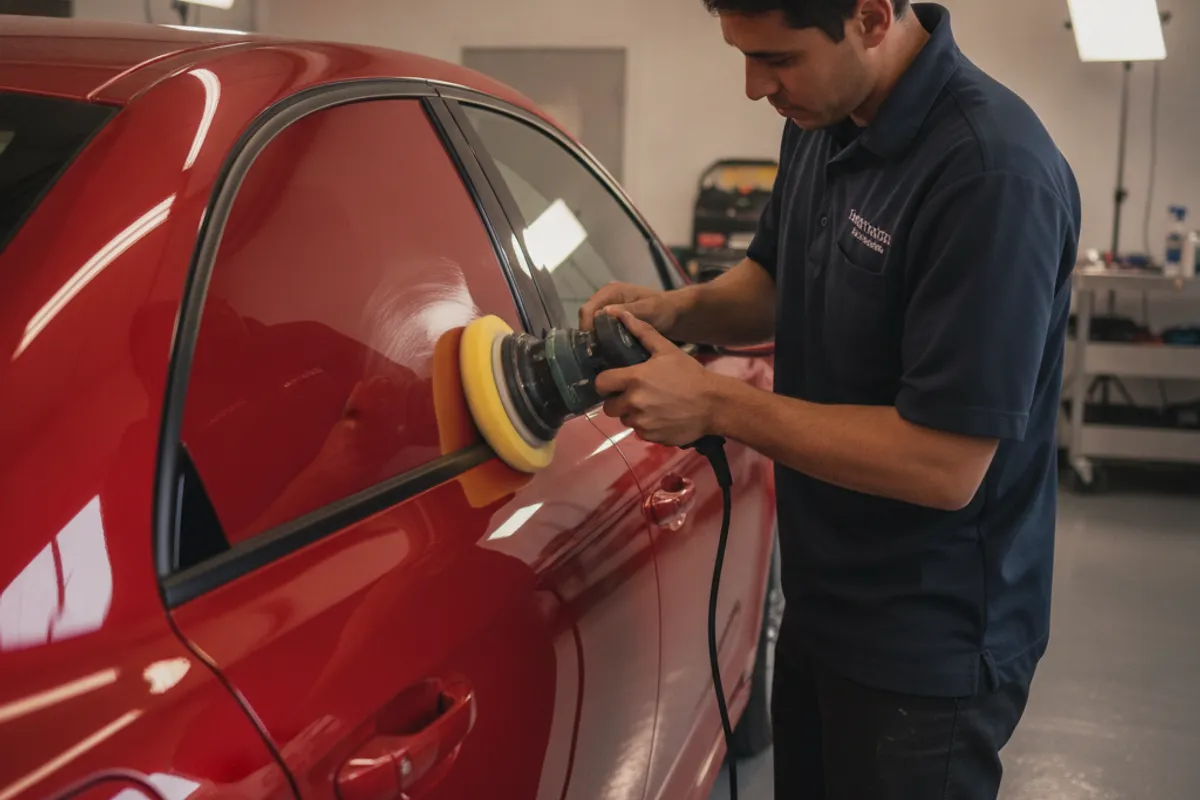
Machine polishing. A dual-action or rotary polisher is used with appropriate compound or polish pads for the correction step. Panel by panel, working in sections. This takes 4-8 hours for a full vehicle depending on condition and what step is being done.
Final IPA wipe-down. After polishing, the surface is wiped with IPA again to strip any polish oils that would interfere with the coating bond.
Coating application. Only after the surface is verified clean, corrected, and oil-free is the ceramic coating applied.
What paint correction costs in San Diego
Ask the installer to itemize correction separately from coating and identify the panels, stages, target result, and written price. This site does not publish a separate paint-correction range.
Paint that has sections with through-to-primer damage or panel resprays cannot be corrected by polishing. Those areas need body shop work before coating is appropriate.
Frequently asked questions
Will the paint correction results last after the coating is applied?
Yes. The coating’s function is to protect the corrected paint surface from future damage. Once the clear coat is leveled and the coating is bonded, the defects removed during correction are gone. The coating prevents the same swirling and environmental damage from recurring at the same rate.
Can I get paint correction without ceramic coating?
Yes. Paint correction is a standalone service at most San Diego detailers and produces a real improvement in paint appearance. Without a coating applied afterward, the corrected paint will begin to accumulate swirls again with routine washing, but a coat of quality carnauba wax or a paint sealant adds some protection.
How do I know if my car needs a one-step or two-step?
Look at the paint in bright direct sunlight at a low angle. Swirl marks appear as circular scratching patterns. Haze appears as dullness. If the paint looks clear and glossy, a one-step polish is likely adequate. If swirls are visible or the surface looks flat and dull, a two-step is worth discussing with your installer.
For more on what the full coating process looks like, see the ceramic coating service page. To get matched with a vetted, insured installer in San Diego County, call (760) 400-6557.